The Complete Guide to Ecommerce AI SEO in 2026: How to Get Your Products Recommended by AI Search
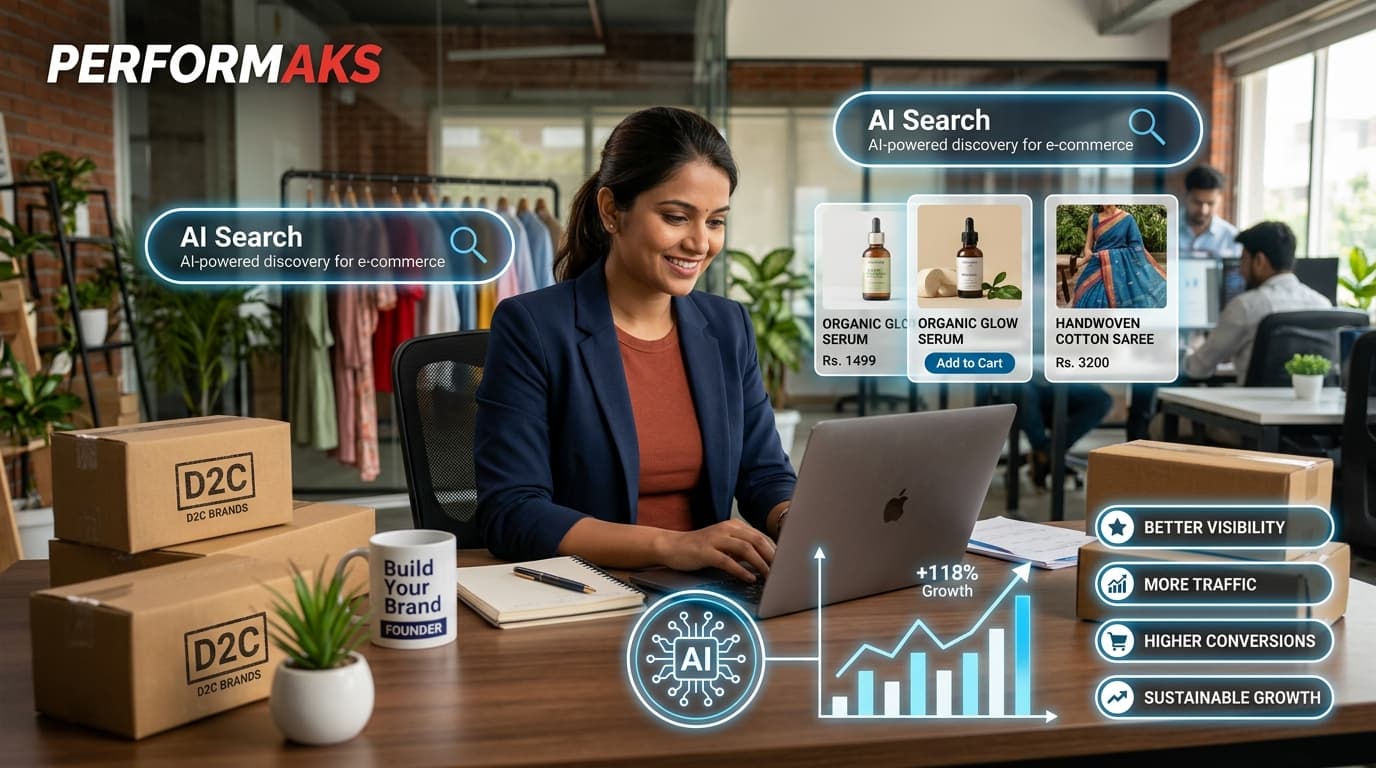
Search is changing rapidly in 2026. Customers are no longer relying only on traditional Google results to discover products. AI-powered search experiences can summarize information, compare products, answer shopping questions, and recommend brands directly. For ecommerce businesses, this means traditional ecommerce SEO needs to evolve into a strategy that helps both search engines and AI systems understand, evaluate, and confidently recommend their products.
The goal is no longer simply to rank at position one. Ecommerce brands need to become a reliable source that AI search systems can understand, cite, compare, and recommend.
What Is Ecommerce AI SEO?
Ecommerce AI SEO is the process of optimizing an online store, product pages, content, structured data, and brand information so that products can be discovered and understood by traditional search engines and AI-powered search platforms.
Traditional SEO focuses heavily on rankings, keywords, backlinks, and organic traffic. AI-focused SEO adds another layer: entity understanding, content quality, product information, credibility, context, and structured data.
For ecommerce brands, this means every important product should have clear information that answers questions such as:
- What is the product?
- Who is it designed for?
- What problems does it solve?
- How does it compare with alternatives?
- What are its key features?
- Why should customers trust the brand?
- Where can customers buy it?
Why AI Search Matters for Ecommerce Brands in 2026
AI search is changing how users research products. Instead of searching for a short keyword such as “best running shoes,” users can ask detailed questions such as:
“What are the best running shoes for beginners who need extra cushioning under $150?”
AI search can interpret the context behind the query and provide recommendations based on multiple factors.
This creates a major opportunity for ecommerce brands. A product may receive visibility even when the customer does not search the exact product name.
However, appearing in AI-generated recommendations requires more than inserting keywords into product descriptions. Search systems need enough reliable information to understand your products, your brand, and the situations where your products are relevant.
How to Build an Ecommerce SEO Strategy for AI Search
1. Create Highly Informative Product Pages
Your product page should be the primary source of truth about your product.
Avoid relying on short manufacturer descriptions or generic copy that appears across multiple websites. Create original content that explains the product's features, benefits, use cases, specifications, materials, sizing, compatibility, and limitations.
Include relevant information naturally rather than forcing keywords into every section.
A strong product page should make it easy for both users and search systems to understand exactly what makes the product different.
Include Product-Specific Information
Depending on your product category, consider adding:
- Product specifications
- Dimensions and materials
- Features and benefits
- Usage instructions
- Compatibility information
- Shipping and return information
- FAQs
- Customer reviews
- Comparison information
- Original images and videos
2. Use Structured Data to Help Search Engines Understand Products
Structured data gives search engines additional machine-readable information about your ecommerce pages.
For product pages, relevant structured data can communicate information such as product name, brand, images, offers, availability, pricing, and reviews when applicable.
For ecommerce websites, implementing appropriate Product, Offer, Review, Organization, and BreadcrumbList structured data can strengthen the machine-readable understanding of your website.
Structured data does not guarantee AI recommendations or higher rankings, but it can make important product information easier for search engines to interpret.
3. Build Topical Authority Around Your Products
One product page is rarely enough to establish strong topical relevance.
Create supporting content around the problems, use cases, comparisons, and questions associated with your products.
For example, a skincare brand selling vitamin C serum could create content around:
Supporting Content Ideas
- How to choose vitamin C serum
- Vitamin C serum for beginners
- Vitamin C serum vs niacinamide
- How to use vitamin C in a skincare routine
- Common vitamin C skincare mistakes
- Best ingredients to combine with vitamin C
These pages can create contextual relationships between informational searches and commercial product pages.
4. Develop an AI Overview SEO Strategy for Shopify Brands
An effective AI overview SEO strategy for Shopify brand websites should focus on creating a connected information ecosystem rather than optimizing isolated pages.
Start by identifying the questions customers ask before purchasing your products. Then create useful content that answers those questions clearly and links users to relevant category and product pages.
Your Shopify store should also maintain consistent product names, descriptions, pricing, availability, brand information, and structured data.
Optimize Your Shopify Content Structure
A strong structure could look like:
Category Page → Subcategory Page → Product Page → Supporting Guide → FAQ
This helps establish clear relationships between products and the broader topics they address.
5. Make Your Brand Information Consistent
AI systems need reliable signals to understand brands.
Keep your brand name, product names, descriptions, company information, and key product attributes consistent across your website and important third-party sources.
Build a recognizable brand entity through:
- An informative About page
- Authoritative product pages
- Customer reviews
- Expert or editorial mentions
- Relevant industry publications
- Consistent business information
- High-quality digital PR and backlinks
The objective is to make your ecommerce brand easier to identify and trust across the web.
Optimize Content for Conversational Search
AI search queries are often longer and more conversational than traditional searches.
Instead of targeting only:
“best face serum”
create content capable of answering questions such as:
“What face serum is best for dry skin and suitable for beginners?”
Use natural language throughout your content and address specific customer scenarios.
Add Comparison and Decision-Making Content
AI search is particularly useful for comparisons and product recommendations.
Create content such as:
- Product A vs Product B
- Best products for specific use cases
- Beginner buying guides
- Product alternatives
- Feature comparisons
- Size and specification guides
- “Which product should I choose?” FAQs
This type of content helps demonstrate where your products fit within a customer's decision-making process.
Measure Your Ecommerce AI SEO Performance
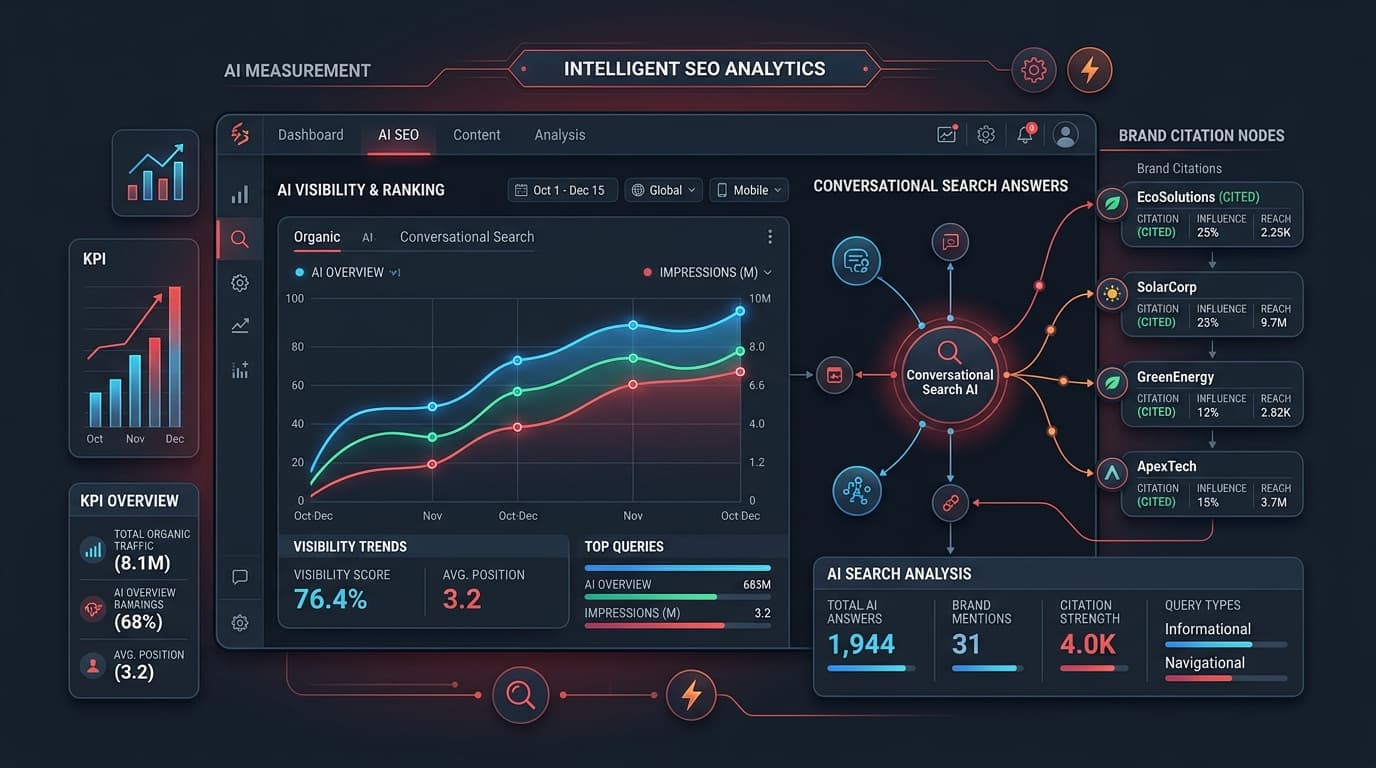
AI search visibility is more difficult to measure than traditional organic rankings. Do not evaluate your strategy using rankings alone.
Track a broader set of signals, including:
- Organic impressions
- Organic clicks
- Non-brand search traffic
- Product-page traffic
- Category-page traffic
- Conversion rate
- Assisted conversions
- Branded search growth
- Referral traffic
- Mentions and citations in AI search experiences
Google Search Console remains important for understanding how your pages perform in traditional Google Search, while analytics and conversion data can help connect visibility with business outcomes.
Final Thoughts
The future of ecommerce SEO is moving beyond traditional keyword rankings. In 2026, ecommerce brands need to create websites that are useful for customers and understandable to search engines and AI systems.
The strongest approach combines technically sound ecommerce SEO, original product content, structured data, topical authority, conversational content, trustworthy brand signals, and a clear internal linking structure.
If your products provide genuine value and your website clearly communicates why, how, and when customers should use them, you give both traditional search engines and AI-powered search systems more reasons to understand and surface your brand.
The goal of Ecommerce AI SEO is simple: don't just optimize to be found—build the information, authority, and relevance needed to be recommended.
- #EcommerceSEO
- #AISEO
- #AISearch
- #ShopifySEO