Maximizing ROI with Performance Marketing Strategies
Performance marketing helps businesses connect marketing spend to measurable outcomes such as clicks, leads, conversions, and sales. Instead of treating campaigns as one-time launches, it uses data, testing, and conversion rate optimization to keep improving results over time. For growing brands, the real opportunity is not simply getting more traffic; it is turning the right traffic into profitable action.
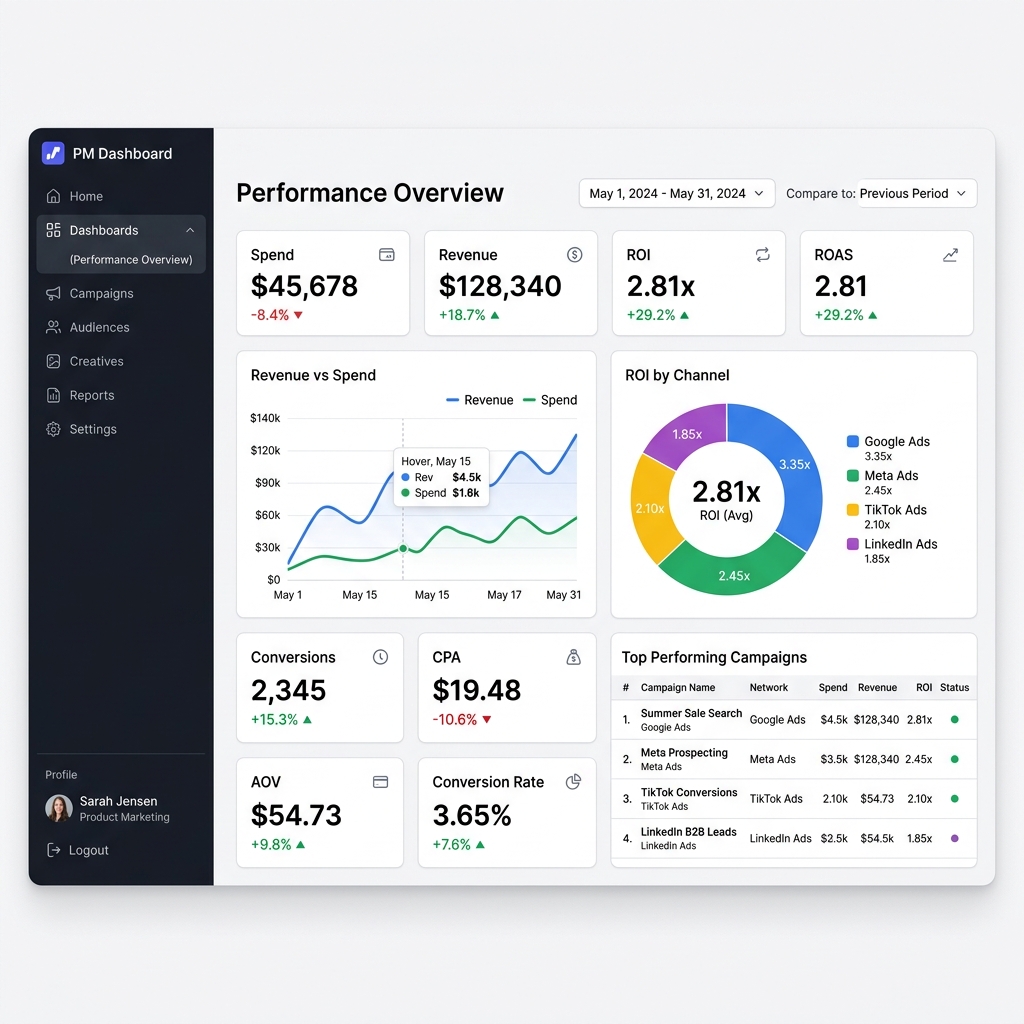
How does performance marketing improve ROI?
Performance marketing improves ROI by making every campaign accountable to a defined result. When budgets are tied to outcomes, teams can quickly see which channels, audiences, creatives, and landing pages are producing value and which ones are wasting spend. This creates a practical feedback loop: invest more in what works, fix what underperforms, and stop paying for activity that does not support business goals.
The biggest shift is from assumption-led marketing to evidence-led marketing. A brand may believe one offer, headline, or audience segment will convert best, but performance data often tells a more useful story. By tracking user behavior from ad click to final conversion, marketers can find friction points and improve each step of the journey.
The link between performance marketing and conversion rate optimization
Conversion rate optimization is the discipline of improving the percentage of users who complete a desired action, such as filling out a form, booking a demo, buying a product, or subscribing to a service. In performance marketing, CRO is not a separate project that happens after campaigns are live. It is part of the campaign cycle from the beginning.
A campaign can generate thousands of visits and still fail if the landing page is unclear, the offer is weak, or the form asks for too much information. CRO helps diagnose those issues. It looks at what users do after they click and asks whether the page gives them enough clarity, trust, and motivation to act.
Common CRO improvements include:
- Sharper landing page messaging: Align the page headline and offer with the ad that brought the visitor there.
- Clearer calls to action: Make the next step obvious, specific, and easy to complete.
- Reduced friction: Shorten forms, simplify navigation, and remove distractions that compete with the main goal.
- Trust-building elements: Add relevant proof points, transparent information, policies, or reassurance where users may hesitate.
- Mobile-first improvements: Ensure pages load cleanly and actions are easy on smaller screens.
When CRO and paid campaigns work together, ROI can improve without always increasing media spend. Sometimes the fastest gain comes from converting more of the traffic a business already has.
Core channels that support measurable growth
Performance marketing services typically use a mix of channels depending on the audience, offer, industry, and sales cycle. The goal is not to be everywhere. The goal is to place the right message where the right user is most likely to respond.
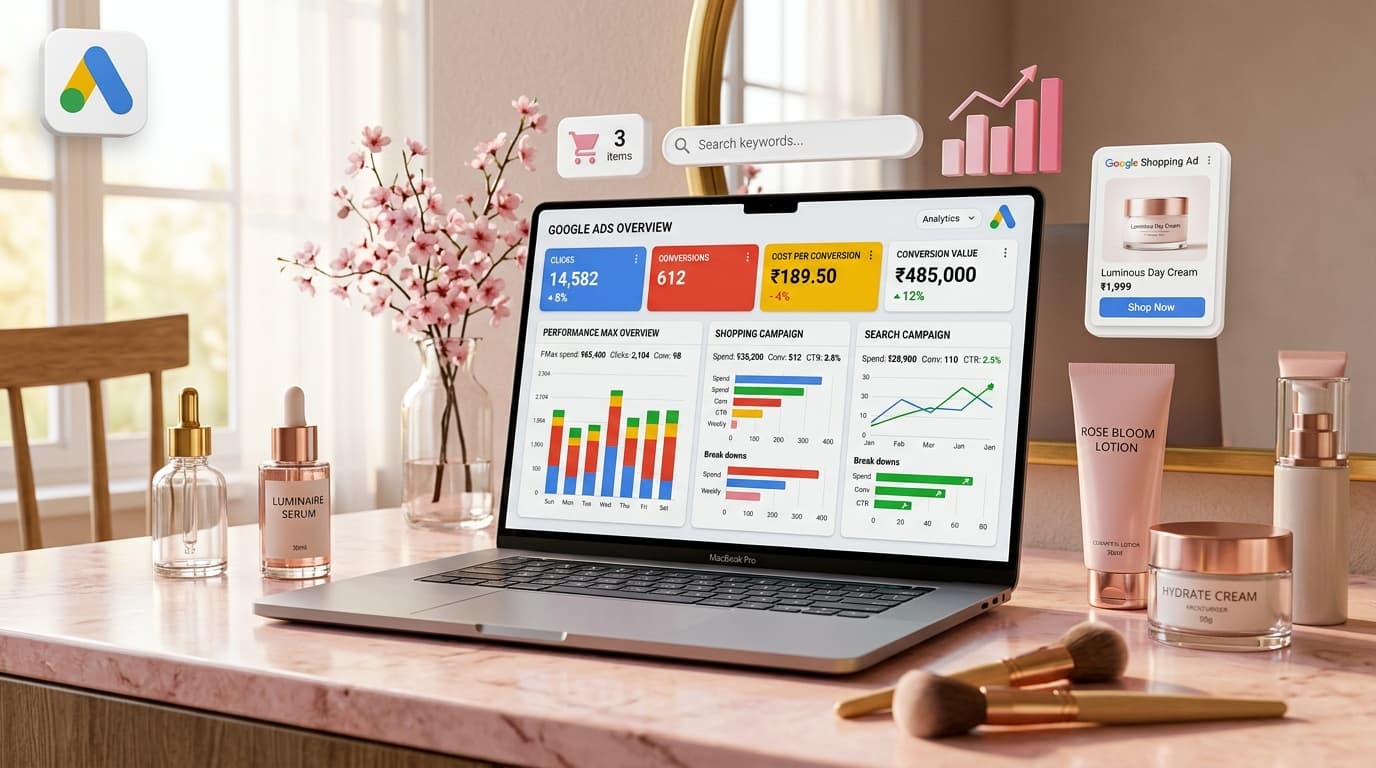
Paid search (Google Advertising) is effective when users already have intent. Someone searching for a product, service, or solution is often closer to taking action than someone casually browsing. Social media advertising (Meta Ads) can build demand, retarget interested users, and test creative angles quickly. Native ads, affiliate campaigns, and influencer partnerships can also support performance goals when tracking and accountability are set up properly.
A balanced strategy may include:
- Acquisition campaigns to reach new prospects.
- Retargeting campaigns to re-engage visitors who did not convert.
- Lead nurturing campaigns for longer buying journeys.
- Offer testing to learn what motivates different audience segments.
- Landing page optimization to improve the conversion path after the click.
Each channel should have a defined role. If a campaign’s purpose is lead generation, success should not be judged only by traffic volume. If the goal is sales, the focus should move beyond clicks to cost per sale, order value, and return on ad spend.
Which metrics matter most for CRO and ROI?
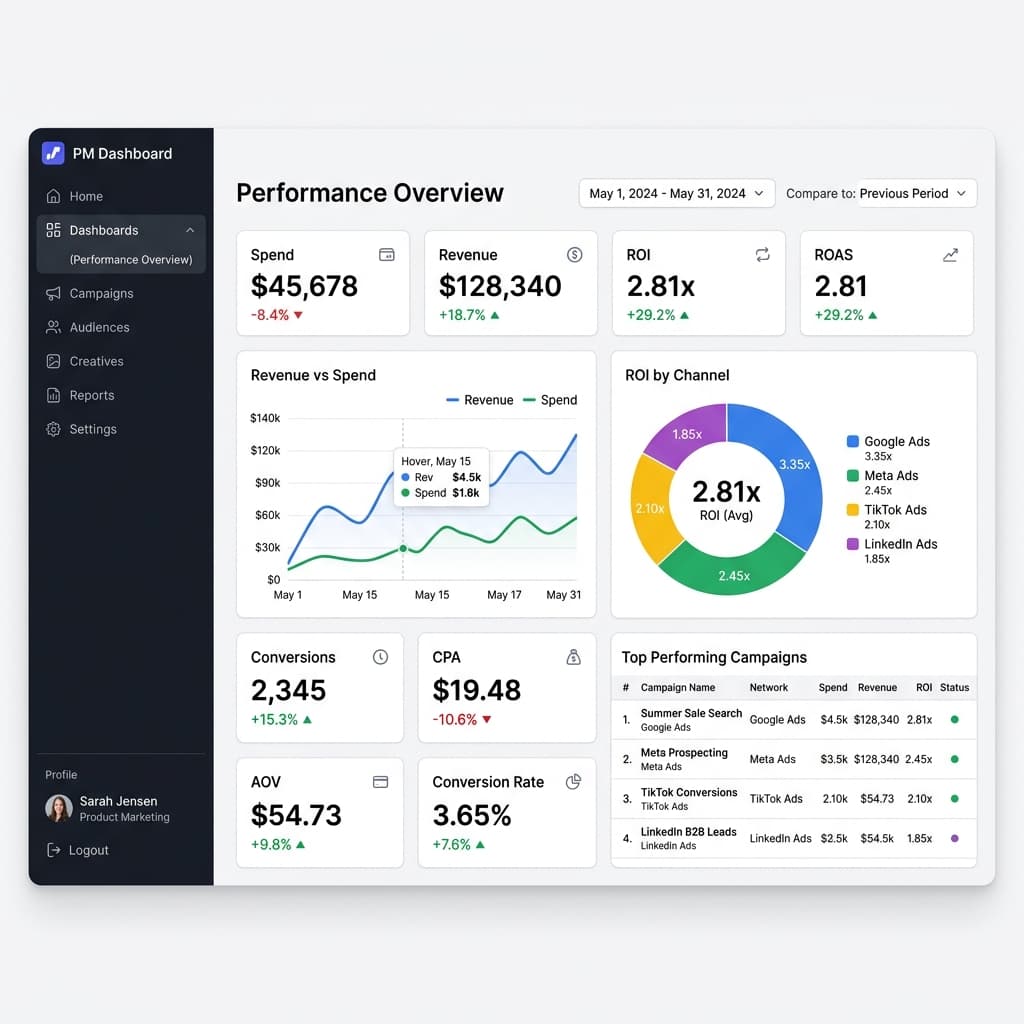
The most useful metrics are the ones that connect marketing activity to business value. Click-through rate can show whether an ad is attracting attention, but it does not prove profitability on its own. Strong performance analysis looks across the full funnel, from impression to conversion to long-term customer value.
| Core Metric | What It Measures | Strategic Impact on ROI |
|---|---|---|
| CTR (Click-Through Rate) | How well ads, headlines, and creative assets earn engagement | Optimizes ad relevance and lowers CPCs |
| CPA (Cost Per Acquisition) | Total spend required to gain a customer or target action | Directly sets the ceiling for campaign profitability |
| CPL (Cost Per Lead) | Acquisition cost per qualified inquiry or lead | Vital for service businesses, B2B campaigns, education, and healthcare |
| CPS (Cost Per Sale) | Direct cost per revenue-generating transaction | Connects spend directly to ecommerce unit economics |
| Conversion Rate (CVR) | Percentage of visitors completing the primary objective | Multiplies the return of every media dollar spent |
| LTV (Lifetime Value) | Total value generated across a customer lifecycle | Defines sustainable payback period and allowable CAC |
| ROI / ROAS | Return generated compared against total marketing investment | The ultimate benchmark for commercial growth |
The value of these metrics comes from interpretation. A low CPL may look successful, but if those leads rarely become customers, the campaign needs refinement. A higher CPA may still be profitable if those customers have strong repeat purchase behavior or high lifetime value.
Practical optimization tactics that improve campaign performance
Good optimization is methodical, not random. Instead of changing several campaign elements at once and hoping for a better result, strong teams test specific hypotheses and measure the impact. This makes learning repeatable.
A/B testing is one of the most common methods. It compares two versions of an ad, landing page, form, or call to action to see which performs better. Multivariate testing can examine multiple elements at the same time, although it usually requires enough traffic to produce useful results. Heat mapping helps reveal where users click, scroll, pause, or drop off, giving marketers a clearer view of real behavior.
Useful optimization questions include:
- Does the landing page match the promise made in the ad?
- Is the offer clear within the first few seconds?
- Are users dropping off before they see the call to action?
- Is the form too long for the value being offered?
- Are different audience segments responding to different messages?
AI and automation can make this process faster. Modern tools can help detect performance shifts, reallocate budgets, identify audience patterns, and surface creative trends. However, automation works best when guided by clear strategy. The tool may show what is happening, but marketers still need to decide why it matters and what to do next.
Choosing the right performance marketing partner in India
For businesses evaluating a performance marketing agency in India, the right choice should be based on transparency, strategic thinking, and reporting quality rather than broad promises. India has a highly active digital market, and agencies may serve different verticals such as e-commerce, healthcare, education, financial services, local services, and technology. The best fit is usually an agency that understands the business model, not just the ad platform.
Before choosing a partner, look for signs that the agency can connect execution with commercial outcomes. A reliable team should be able to explain how campaigns will be tracked, what metrics matter, how often performance will be reviewed, and how optimization decisions will be made.
Use this checklist during evaluation:
- Goal clarity: Do they define success around leads, sales, revenue, qualified pipeline, or another business outcome?
- Reporting transparency: Will you see spend, performance, tests, learnings, and next steps clearly?
- Industry relevance: Do they understand your audience, buying cycle, compliance needs, or competitive landscape?
- CRO capability: Can they improve landing pages and funnels, not just run ads?
- Testing discipline: Do they use structured experiments rather than frequent guesswork?
- Scalability: Can they explain how budget increases will be managed without sacrificing efficiency?
The right partner should feel less like a media buyer and more like a growth team. Performance marketing services are most valuable when strategy, creative, analytics, and conversion rate optimization work together.
Turning data into better decisions
Performance marketing is powerful because it turns campaigns into learning systems. Every click, lead, sale, and drop-off can reveal something about the audience. Over time, those insights help businesses sharpen messaging, improve offers, build better landing pages, and invest with more confidence.
The key is to avoid chasing isolated numbers. High traffic is not enough. Cheap leads are not enough. Even strong click-through rates matter only if they contribute to profitable growth. The best strategies combine channel expertise with careful CRO, meaningful metrics, and continuous testing.
If your marketing budget needs to work harder, start by auditing the full journey from ad impression to conversion. Find the points where users lose interest, remove avoidable friction, and invest more in the audiences and messages that show real intent. That is how performance marketing becomes more than a campaign tactic; it becomes a disciplined path to better ROI.
Ready to Boost Your Marketing ROI?
Partner with PERFORMAKS to integrate full-funnel paid media, high-converting CRO, and relentless testing engineered for profitable scale.
Book Your Growth Consultation- #PerformanceMarketing
- #ROI
- #CRO
- #PaidAds
- #GrowthMarketing
- #DigitalMarketingIndia