AI SEO for D2C Startups in India: How Performaks Can Help Build Organic Growth
India’s direct-to-consumer (D2C) market is becoming increasingly competitive. From fashion and skincare to food, wellness, and home décor, D2C startups need more than paid advertising to build a sustainable online business. They need a strong organic presence that helps potential customers discover their products, compare options, and make informed purchasing decisions.
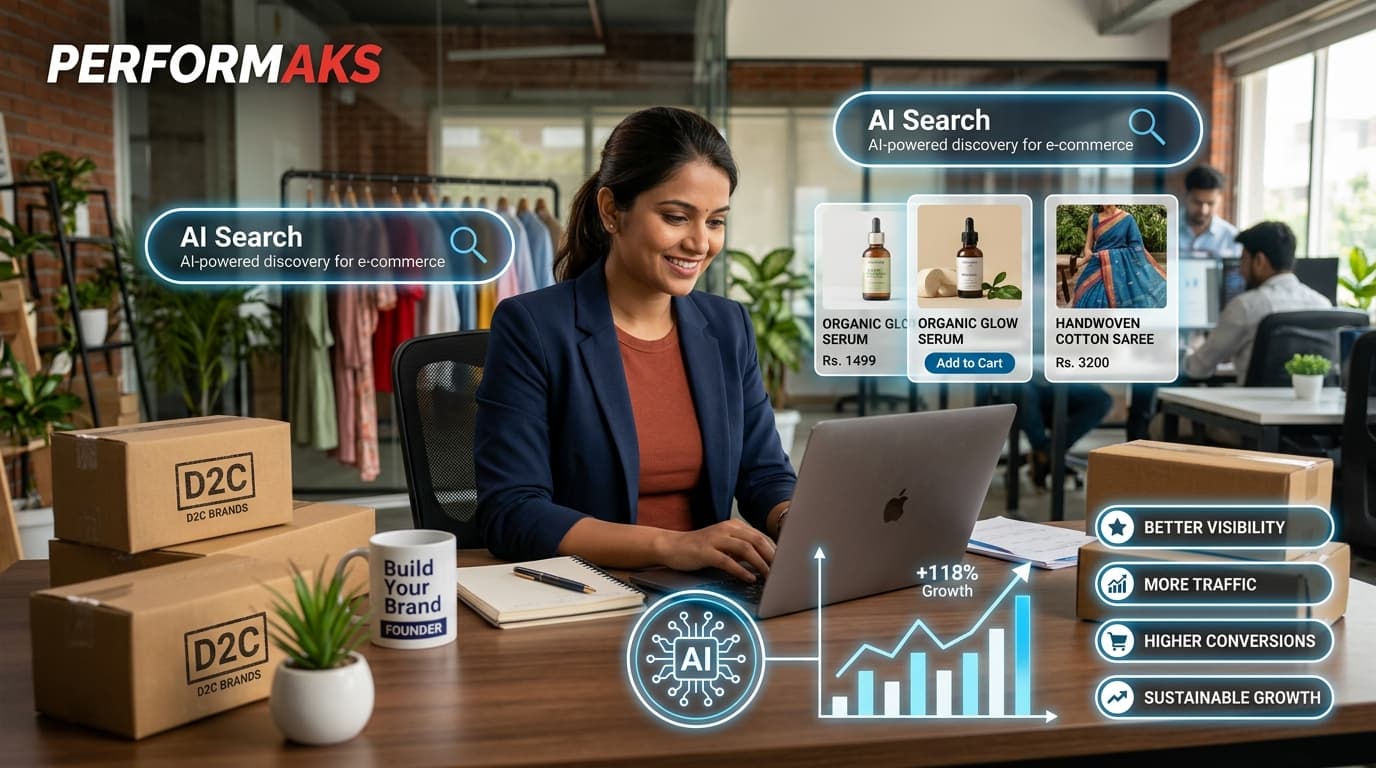
Traditional SEO remains essential, but the way people discover brands is evolving. Alongside conventional search results, consumers increasingly encounter AI-generated answers, product recommendations, and conversational search experiences. D2C businesses must therefore consider how their websites can perform in traditional search engines and emerging AI-powered discovery channels.
This is where AI SEO services can help.
At Performaks, we help D2C and ecommerce brands build a stronger digital presence through data-driven marketing strategies, technical optimization, and content designed around customer intent. By combining established SEO fundamentals with AI search optimization techniques, brands can work toward sustainable organic growth and better visibility throughout the customer journey.
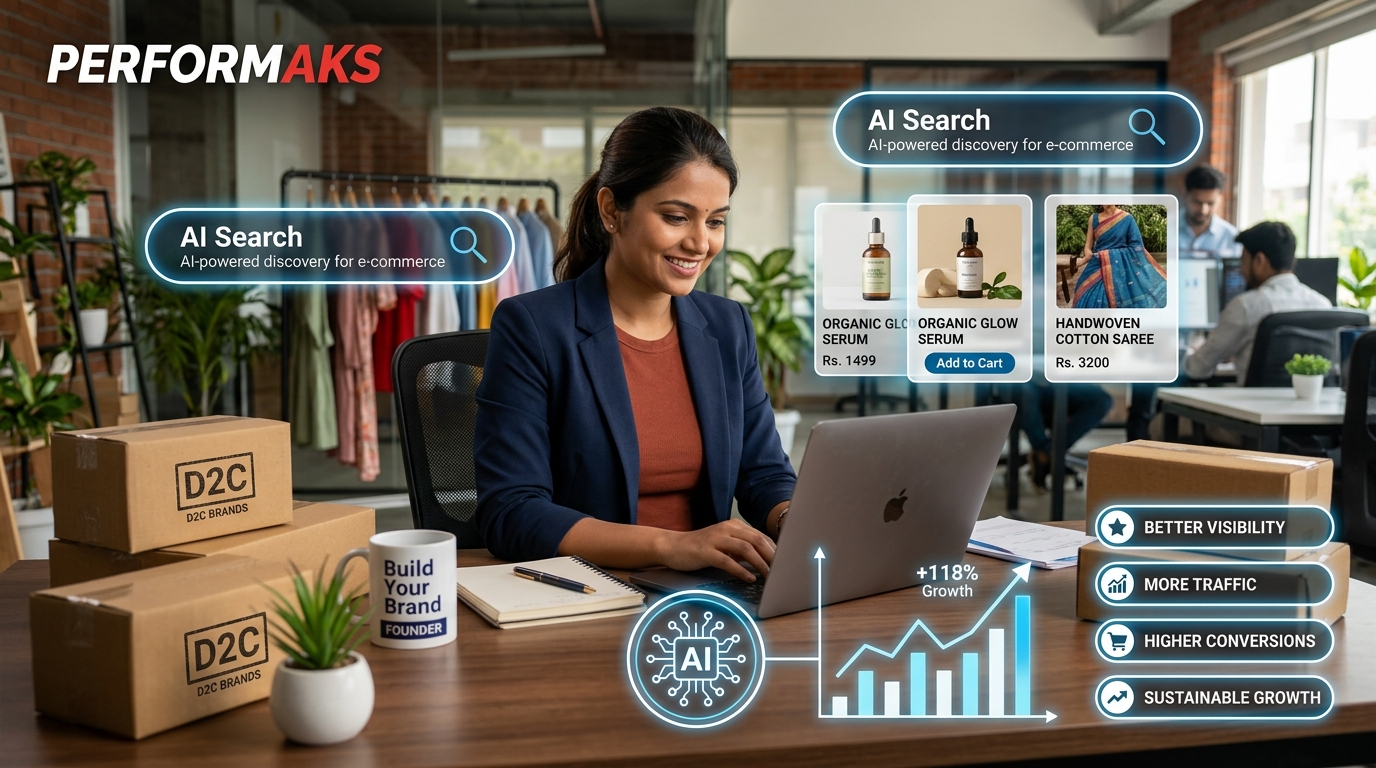
What Is AI SEO and Why Does It Matter for D2C Startups?
AI SEO refers to the use of artificial intelligence, data analysis, and search optimization techniques to improve a website’s discoverability across search experiences. It can include AI-assisted keyword research, content analysis, technical SEO recommendations, search-intent mapping, and optimization for AI-powered search experiences.
For D2C startups, AI SEO is not simply about publishing AI-generated content. It is about helping search engines and AI systems understand a brand, its products, its expertise, and the questions it can answer.
For example, a skincare startup selling vitamin C serums may want to appear when potential customers search for:
- Best vitamin C serum for beginners
- How to choose a vitamin C serum for your skincare routine
- Vitamin C serum for dull-looking skin
- Affordable vitamin C serums from Indian brands
A well-planned SEO strategy can help the brand create relevant product pages, educational guides, and useful comparisons that address these needs.
AI SEO can support this process by helping teams identify content opportunities, organize search queries, analyze competitors, and improve the relevance of website content. However, results still depend on content quality, website accessibility, competition, and the overall strength of the brand.
Why D2C Startups in India Need AI SEO Services
Many early-stage D2C businesses rely heavily on paid advertising to generate sales. While paid campaigns can produce quick visibility, acquisition costs and competition can make long-term growth challenging.
Organic search provides another way for customers to discover a brand while researching products and comparing solutions.
Here are five reasons AI SEO deserves attention.
1. Reach Customers With High Purchase Intent
Not every search visitor is ready to buy. Some people are researching a problem, while others are comparing products or looking for a specific brand.
A strong AI SEO strategy starts by identifying these different search intents and mapping them to relevant pages.
For example, a home décor brand could create:
- Educational articles about choosing furniture for small apartments
- Category pages for specific furniture styles
- Product pages with detailed specifications and useful imagery
- Comparison content addressing common purchasing questions
This approach helps a brand build visibility across different stages of the buying journey instead of targeting only broad, highly competitive keywords.
2. Improve Visibility Across AI-Powered Search Experiences
Search behavior is expanding beyond traditional blue links. Depending on the platform and query, people may receive AI-generated summaries, product recommendations, or conversational answers.
D2C brands can improve their eligibility for discovery by maintaining accessible websites, providing accurate product information, publishing original and useful content, and establishing credible brand signals.
An effective strategy may include:
- Creating clear, answer-focused content for relevant customer questions
- Providing consistent product names, descriptions, prices, and availability information
- Strengthening internal links and website structure
- Using appropriate structured data for products, organizations, and other supported content types
- Building brand credibility through genuine customer reviews, expert input, and relevant third-party mentions
These practices can help search systems interpret a website more effectively. However, no AI SEO agency can guarantee that a brand will be cited or recommended by a particular AI platform.
3. Build Long-Term Organic Traffic
Paid campaigns generally stop generating paid traffic when advertising stops. Organic search can continue bringing relevant visitors to useful pages over time, although rankings and traffic can fluctuate.
For a D2C startup, this means investing in assets that support discovery beyond individual advertising campaigns.
These assets may include optimized product pages, category pages, buying guides, comparison articles, and educational resources.
The goal is not simply to publish more content. It is to build a connected website that addresses customer needs and supports purchasing decisions.
4. Discover More Relevant Keyword Opportunities
D2C brands often focus on broad keywords such as “skincare products,” “running shoes,” or “organic snacks.” These terms may have significant competition and may not always reflect a specific buying need.
AI-assisted research can help uncover more focused opportunities.
For example, a sustainable fashion startup could explore searches related to fabric types, clothing care, product comparisons, and specific occasions. These opportunities can then be evaluated using keyword data, search results, customer questions, and commercial relevance.
The most useful keywords are those that connect a real customer need with a relevant page on the website.
5. Make SEO Decisions Using Data
AI tools can help analyze large amounts of keyword, content, and performance data. SEO specialists can use those insights to prioritize opportunities and identify potential problems.
For example, a startup may discover that several product pages receive impressions but few clicks, while a small number of category pages generate most of its organic conversions.
These findings can guide improvements to page titles, descriptions, product information, internal links, and content strategy.
AI can accelerate analysis, but human review remains important to ensure that recommendations are accurate, relevant, and commercially useful.
What Should an AI SEO Strategy Include for a D2C Brand?
An effective AI SEO strategy combines technical foundations, customer-focused content, ecommerce optimization, and ongoing performance measurement.
1. AI-Assisted Keyword Research and Search Intent Mapping
Keyword research should reflect how customers discover and purchase products.
For a D2C business, this means identifying informational, commercial, and transactional searches and assigning them to the most appropriate pages.
For example, a nutrition brand may target educational queries through its blog, product-specific searches through product pages, and category-level searches through collection pages.
AI-assisted analysis can help group related queries and identify content gaps. Keyword tools and search results should still be used to validate search demand and intent.
2. Ecommerce Website and Technical SEO
Even high-quality content may struggle to perform if search engines cannot access, render, or understand important pages.
Technical SEO is particularly important for ecommerce websites with large product catalogs, multiple filters, and frequently changing inventory.
Key areas to review include:
- Crawlability and indexability of important pages
- XML sitemap accuracy and canonical URLs
- Mobile usability and page performance
- Duplicate or thin product and category pages
- Internal linking and navigation
- JavaScript rendering and access to important page content
- Appropriate product and breadcrumb structured data
These improvements help establish the technical foundation needed for organic visibility.
3. Product Page and Category Page Optimization
Product and category pages often play a direct role in ecommerce conversions. They should communicate product relevance clearly to both users and search systems.
A well-optimized product page may include a descriptive title, unique product information, useful specifications, high-quality images, shipping and return details, and genuine customer reviews where available.
Category pages should help customers navigate product options and understand what makes the collection relevant to their needs.
AI-assisted content analysis can identify missing information and repetitive descriptions, but published copy should be accurate, distinctive, and useful rather than mass-produced.
4. Content Strategy Based on Customer Questions
A blog can attract potential customers before they are ready to purchase.
For example, a D2C skincare brand could create content about ingredient selection, product comparisons, skincare routines, and common product-use questions. Each article should serve a clear purpose and link naturally to relevant products or categories.
The content strategy should be based on customer needs, search demand, business priorities, and the site's existing content—not on publishing a large volume of AI-generated articles.
Original research, expert review, practical examples, and firsthand product knowledge can help distinguish a brand from competing websites.
5. AI Search Optimization and Brand Visibility
AI search optimization focuses on making a brand's information clear, accurate, accessible, and supported by credible sources.
For D2C startups, this can include improving product information, creating useful explanatory content, maintaining consistent brand details, and developing genuine authority in the relevant product category.
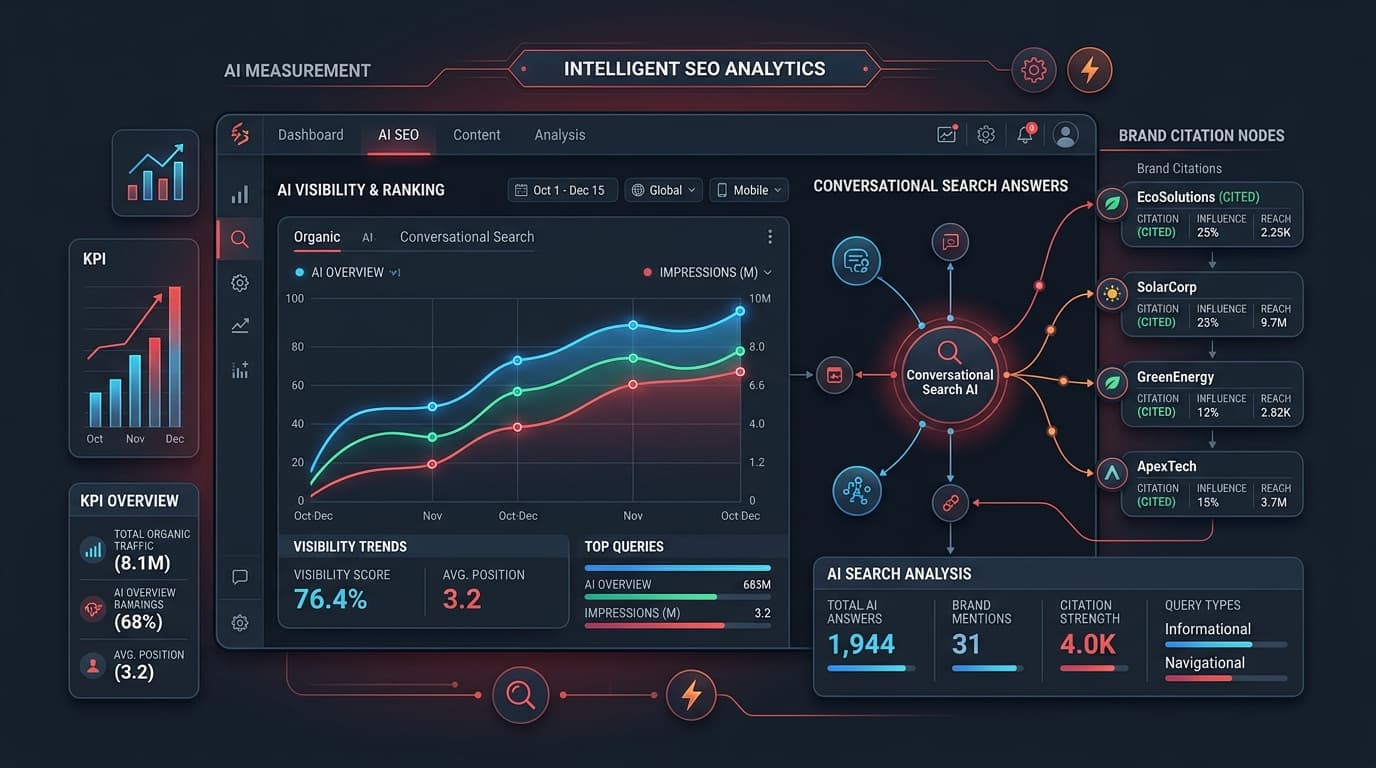
Performance should be assessed using available evidence, such as referral traffic from AI platforms, organic search performance, brand mentions, and relevant conversion data. AI citation tracking may be useful, but visibility can vary by platform, location, and query.
How Performaks Helps D2C Startups Build Organic Growth
Choosing an AI SEO agency for D2C brands requires more than finding a provider that uses AI tools. The strategy should connect search visibility with business objectives, product discovery, and customer acquisition.
Performaks is a growth marketing agency focused on helping D2C and ecommerce businesses grow through data-driven strategies and creative execution.
Our approach to AI SEO can support brands across the following areas.
1. SEO Audits and Opportunity Identification
The first step is to understand the website's current condition and identify opportunities for improvement.
An SEO audit can evaluate technical issues, indexation, site structure, existing keyword visibility, content gaps, and competitor positioning.
For startups, this helps prioritize changes according to their potential impact rather than spending resources on disconnected SEO tasks.
2. Keyword Strategy for D2C Growth
Performaks can help develop a keyword strategy that aligns with the brand's products, target customers, and commercial goals.
The process involves identifying relevant search terms, understanding search intent, evaluating competition, and mapping keywords to existing or planned pages.
This helps reduce unnecessary keyword overlap and creates a clearer roadmap for optimizing product pages, categories, service pages, and blog content.
3. Ecommerce SEO and Content Optimization
A D2C website needs both discoverable content and a smooth shopping experience.
Performaks can help identify improvements to product and category page content, internal linking, metadata, website structure, and supporting blog content.
The objective is to make pages more relevant to customer searches while helping visitors find the information they need to make purchasing decisions.
4. AI Search Readiness
AI search readiness builds on established SEO rather than replacing it.
A practical strategy can include improving content clarity, strengthening technical accessibility, answering relevant customer questions, using suitable structured data, and developing credible brand information.
Performaks can incorporate these priorities into a broader organic growth strategy, with recommendations based on the website's current needs and available evidence.
5. Performance Tracking and Continuous Improvement
SEO should be evaluated using business-relevant metrics, not rankings alone.
Depending on the website and available tracking, performance monitoring can include:
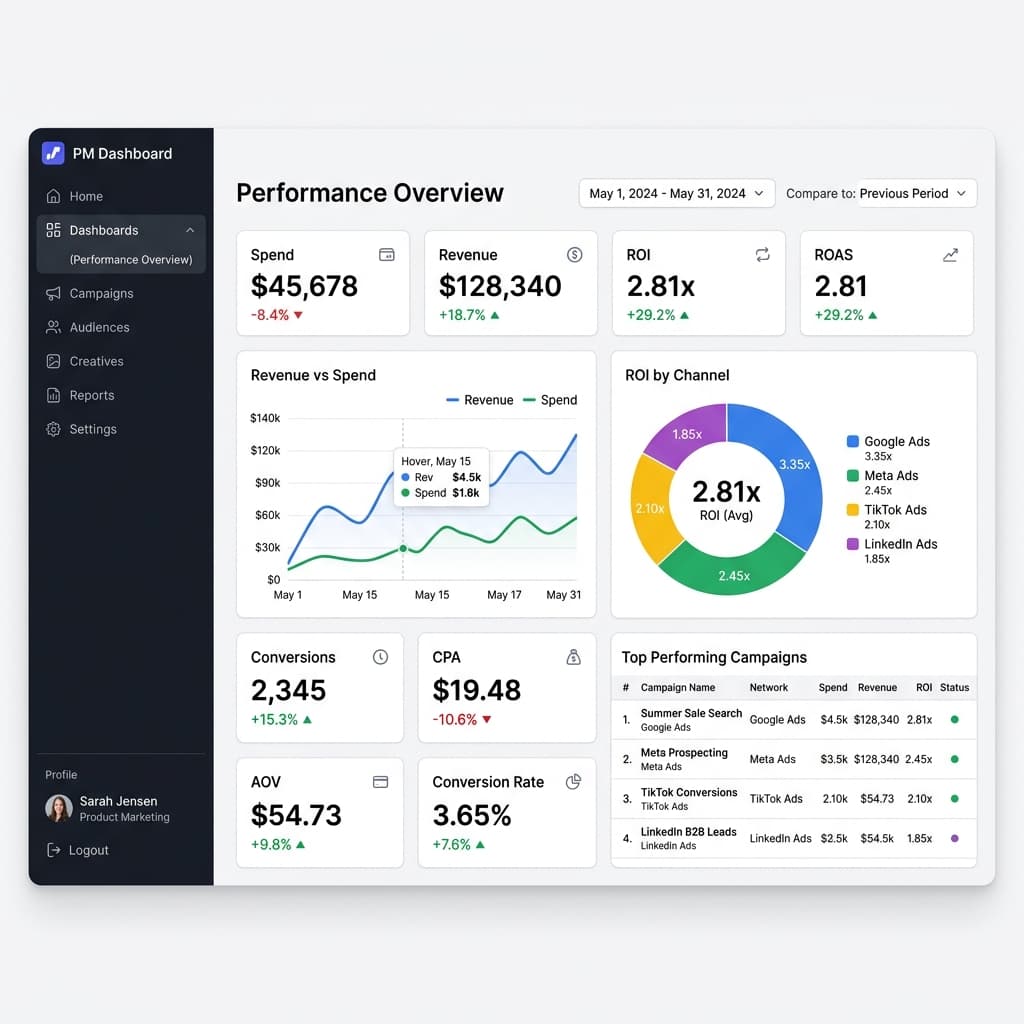
- Organic clicks and impressions from Google Search Console
- Relevant keyword visibility
- Organic landing-page engagement
- Product-page visits and ecommerce conversions
- Organic leads and enquiries
- Revenue attributed to organic search, where reliable tracking is available
- Referral traffic from AI search platforms, where measurable
These insights help identify which pages are improving, where users encounter friction, and which opportunities deserve further investment.
How to Choose the Right AI SEO Agency for D2C Brands
Before hiring an agency, D2C founders should evaluate whether its approach fits their business stage, website, and growth objectives.
Consider these questions:
- Does the agency understand ecommerce SEO? Product catalogs, category pages, faceted navigation, and inventory changes create challenges that differ from those of a simple brochure website.
- Does it provide a clear strategy? You should understand which pages will be prioritized, why those pages matter, and how success will be measured.
- Does it use AI responsibly? AI should support research and analysis without replacing factual review, editorial judgment, or original expertise.
- Does it explain reporting and deliverables? Ask what the agency will work on, how frequently progress will be reviewed, and which metrics will be reported.
- Does it set realistic expectations? Organic growth takes time, and neither traditional SEO nor AI SEO can guarantee rankings, traffic, sales, or AI-generated citations.
The right partner should help you understand both the opportunities and the limitations of your SEO investment.
Common AI SEO Mistakes D2C Startups Should Avoid
Even with the right tools, a poorly planned strategy can waste resources.
Avoid these common mistakes:
- Publishing large volumes of repetitive AI-generated content without meaningful value
- Targeting keywords without checking their intent or relevance to your products
- Creating multiple pages that compete for the same search intent
- Ignoring technical SEO while focusing exclusively on content
- Overlooking product information, category navigation, and internal links
- Treating AI citations as the only measure of success
- Expecting immediate rankings or guaranteed sales
- Failing to connect organic search data with leads and ecommerce conversions
A sustainable strategy combines technical quality, relevant content, genuine brand credibility, and ongoing measurement.
Frequently Asked Questions About AI SEO for D2C Startups
What are AI SEO services?
AI SEO services use artificial intelligence and data-driven techniques to support activities such as keyword research, content analysis, technical SEO, search-intent mapping, and optimization for AI-powered search experiences. They should complement established SEO practices rather than replace them.
How can an AI SEO agency help D2C brands in India?
An AI SEO agency for D2C brands can help improve product and category page optimization, identify relevant keyword opportunities, strengthen website structure, develop useful content, and evaluate organic search performance. The specific work depends on the website's existing strengths and challenges.
Are AI SEO services suitable for early-stage startups?
Yes. Startups can use AI-assisted SEO to prioritize opportunities, research customer questions, and improve important pages. The strategy should reflect the startup's budget, available resources, competition, and business goals.
How long does AI SEO take to show results?
There is no fixed timeline. Results depend on factors such as website history, technical condition, competition, content quality, and the resources invested. Some improvements may produce measurable changes earlier than others, but sustainable organic growth generally requires ongoing work.
Can AI SEO improve visibility in ChatGPT and Google AI Overviews?
Good SEO practices can help make a website accessible, understandable, and useful to search systems. However, visibility in ChatGPT, Google AI Overviews, and other AI experiences depends on the platform, query, available sources, and other factors. No agency can guarantee inclusion.
How can a D2C startup measure AI SEO success?
Start by tracking organic impressions, clicks, relevant landing pages, qualified traffic, and conversions. Where data is available, also evaluate referral visits from AI platforms, brand visibility, and the contribution of organic search to revenue.
Build Sustainable Organic Growth With Performaks
For D2C startups in India, organic growth requires a strategy that connects customer intent, ecommerce SEO, helpful content, and evolving search experiences.
AI SEO can make research and optimization more efficient, but the foundation remains the same: build a technically accessible website, provide accurate and useful information, establish brand credibility, and measure performance against meaningful business outcomes.
Performaks can help D2C and ecommerce brands develop a data-driven approach to SEO and organic growth based on their specific business goals.
Looking to strengthen your D2C brand's organic visibility?
Connect with Performaks to discuss your website's SEO opportunities and explore an AI-powered search strategy aligned with your growth objectives.
Book Your Growth Consultation- #AISEO
- #D2CStartups
- #SEOIndia
- #EcommerceSEO
- #GEO
- #OrganicGrowth